It’s RUtv’s final newscast for 2010. And because it’s the holidays, we have some gift suggestions. We ask, “should you say Happy Holidays?” And, we take a look at whether Ryerson is to Asian.
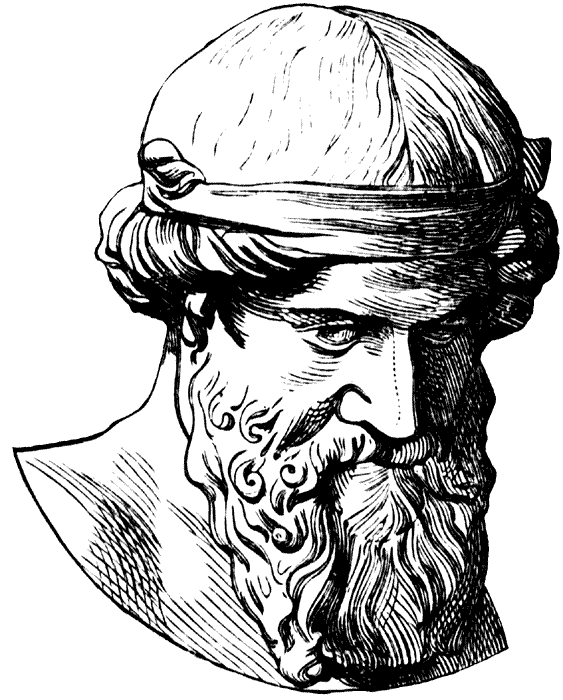
This year I am taking a course in Western political thought. And so I’ve started reading about the great thinkers and influential minds that have shaped and criticized democracy and the modern state. One of these minds is Plato, a man opposed to the concept of democracy. Below are some thoughts I presented on his work The Republic for my class.
Plato’s The Republic develops the idea that the strength and success of the state is directly tied to the values citizens live by. Early on Plato outlines that legislation doesn’t construct a strong state. “They are always fancying that by legislation they will make an end of frauds in contracts, and the other rascalities which I was mentioning, not knowing that they are in reality cutting their heads of a hydra?”
Plato argues that legislation and policies do nothing to solve the problems states face if fundamental values aren’t perfected in individuals and the state. And Plato names three important values the state must posses; courage, wisdom and justice. Wisdom, he says is a value that requires people to act for the interests of all groups and all parties. And justice means that people must jobs according what their skills and natural talents say they ought to do. Justice becomes uniquely important when determining who leads or manages the state. Plato writes that according to the value of justice those who have been educated and formed over a period of time have the just right, or the skills and natural talents to lead society. He specifically selects philosophers as the group in society with the natural skills and talents to lead others as opposed to manual labourers whom, he says, don’t have the necessary skills to make sufficient decisions.
But in defining these sections of society, Plato says this doesn’t mean that any class has power to exploit, marginalize and neglect another class. Instead all must act for the good of all citizens. Particularly, politicians must act to serve everyone in society, particularly those classes who are disempowered.
Plato says:
“They must descend again among the prisoners of the den and partake of their labours and honors, whether they are worth having or not. The intention of the legislator, who did not aim at making any one class in the State happy above the rest, the happiness was to be in the whole State.”
This concept of acting in the interest goes back to the idea of wisdom, which Plato defines of acting in the common good or doing what’s is right for all people. Statesmen he claims are compounded to rule in the interest of masses and listen to what they’re saying.
Problems arise from this point of view though. Plato’s argument doesn’t assure us that leaders will act in the interest of all. In an ideal world this will happen but in reality, will it? This is particularly important because Plato objects to democracy. And one of democracies most important functions is to act as a cheque and balance to protect citizens from their leaders. Plato’s plan for the state doesn’t give us this assurance.
Every journalist fears that one interviewee that’s a dud. The person who answers every question with a no or yes.
But the problem isn’t with the interviewee. But with the questions the journalist is asking.
Last week , Anna Maria Tremonti host of CBC’s the Current visited my Radio class and gave us some tips on interviewing.
She taught us how to illicit vivid details and narrative and told other interesting things about her life as a journalist.
Good interviewing is particularly important for radio and TV which relies on sound bites.
In print you can always get away with paraphrasing details and still have a good story.She said:
You can never read to much. Everything you can think of read it in preparation for an interview.
Always let them tell you the story. Say your covering the aftermath of a hurricane. And your doing a live interview with someone who’s living room and kitchen just got flooded. As the journalist you know that. But your audience doesn’t. So don’t ask, “Jim I heard the river burst it’s banks flooded your back yard and then came pouring into your kitchen. Is that correct? ” Better to say, “Tell me what the hurricane did to your house?”
Shut up. You’re not there to be a star. Or to impress the interviewee or the audience with how much you know. As a reporter you’re there to ask questions and get them to talk.
Not all questions in an interview have to be questions. Some are statements. Some are prompts.
Different types of interviews exist. Sometimes it’s about holding officials to account. And your questions will be structured to reflect that purpose. Other times you interview because people have undergone amazing circumstances and they have a story to tell. The purpose then is to get them to tell the story in a compelling fashion.
Ask simple questions. Even stupid ones. Sometimes the most important facts are disclosed in the questions journalists are afraid to ask because they think they will look dumb.
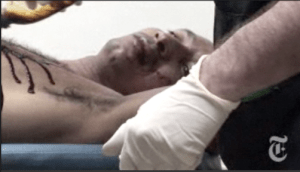
Our Spanish speaking neighbour has been struggling with this astronomical amount of killings for years and they’ve been steadily rising, the article says.
Click picture to go to NY Times video about Venezuela's soaring murder toll
Moreover what’s interesting , is the connection that Venezuela’s high murder rate might have to Trinidad’s. Specifically, how much of Trinidad’s illegal arms and ammunition wanders across from Venezuela, undetected by authorities, but grasped by local criminals.
PS. Back from month’s blogging rest. Hoping to start weekly posts as of this week. 🙂
If you are a regular reader of this blog. You’d probably noticed that it’s been inactive for a while. Don’t worry weekly posts on the mix mash of topics of a Trini-Canadian journalism student will return on August 15th. And keep watching in September, because we have a special project we’re working on.
See you in August and get some rest yourself, too.
How many times must a journalist ask a question before it gets answered. About eight times if your Newsnight host Jeremy Paxman.
As you’d see in this clip the BBC’S Paxman persists and persists until his guests answer the question. And when they don’t answer he let’s them know they haven’t in his ever so polite English accent. Either way fruit of this is pure entertainment and the lesson to budding journalist to listen carefully to whether the interviewee has answered their question.
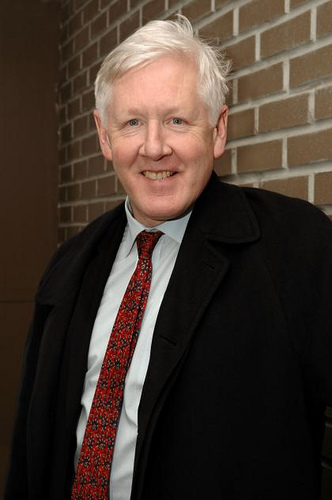
I didn’t trust my eyes. So I had to ask my friend to turn around and tell me if she too was seeing Bob Rae ridding in the same TTC subway car and battling against the same 9 pm rush that we were.
She couldn’t tell for sure if the navy blue suited man reading the book Lords of Finance was Bob Rae for sure. But she thought he looked special.
And he did look special as the lights of the subway car accentuated his thin white hair; the way lights do on a movie set would. The effect almost anointed sainthood upon him.
Bob Rae
If it wasn’t for the random light effect, it’d be easy to miss the man who might very well be Canada’s future prime minister. This is because he just seemed so normal as he sat looking into space with a colleague sitting next to him glancing through an issue of the Economist.
Pardon my fuss. It’s just in Trinidad it’s not every day the commuter sitting across from you is a member of parliament. Politicians don’t make such cameos. They’re chaufered in tinted SUV’s along a priority roadway that the average vehicle can’t drive on, in Trinidad at least. And so this was a big deal for me.
Talk to him shall I? I was too damn scared to. However, he did make eye contact with me. He smiled and I nodded.
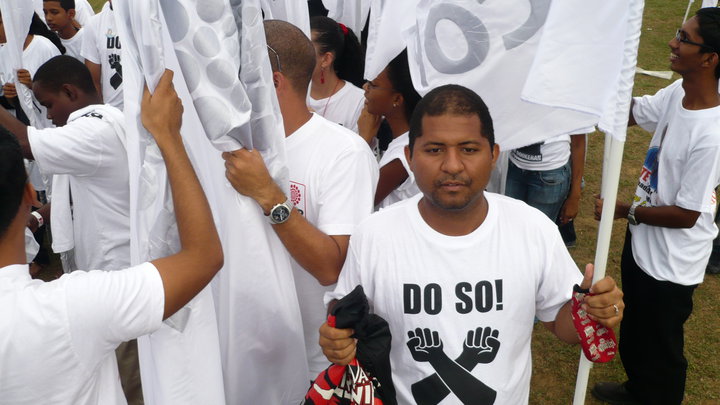
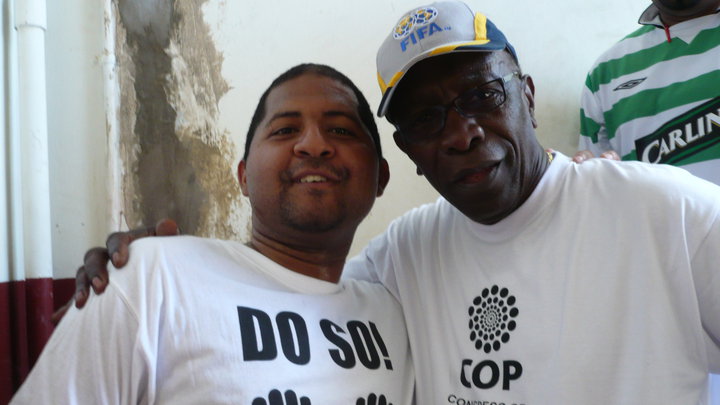
While some PNM voters still have election tabanca, supporters of the People’s Partnership are celebrating their party’s victory. They relish the change they hope the coalition party will bring. One such person is Richard Mural, a member of the COP’s Youth Congress.
Less than three hours after the polls closed, I rushed to the Queen’s Park Savannah to deliver a brown sealed envelope to the COP tent pitched near Citibank. Songs like Vote Dem Out and our popular campaign song Manning Must Go blared from underneath the camp. I quickly maneouvred myself through the crowd asking whose hands this confidential package must land in. In it were the election results for the polling station I monitored that day.
Mission accomplished, I listened to the results as they started to trickle in from a television setup underneath the tent. Some friends and I soon went over to the COP flagship house on Traggerete Road. There, everyone’s eyes were also on the television, and soon including myself. I was extremely anxious from the time I entered the doors of the COP’s house. My inner voice told me, “Richard you have done it. You have worked extremely hard now. Now it’s the time for change.”
My history and reasons for joining the COP began in 2006. That’s when it was first formed. The moment I read about them they stood out to me immediately. I sensed a community of love there. But it was one Saturday morning when I was walking through Sweet Briar Road, St Clair, I saw their booth. I learn’t about what they stood for as a party. The people’s warmth and hospitality confirmed that I wanted to be in this party, that I wanted to support them. The first person I met and became friends immediately with was Ryan D’arcy . He encouraged me deeply to be a part of the party.
I was convinced. I joined the Youth Congress. And in this election worked in the Port-of- Spain South Constituency and in the Diego Martin Constituency. On the campaign trail I saw many youth follow disciples Jack Warner and Winston Dookeran. These men have been two great inspirations towards us. Every time there was a walk about in the depressed areas we always had a large turn out . In every campaign rally there was always a strong message to carry back home with us and they were often packed with persons.
I chose to do this. I felt it’s my call to bring peace and stand for the rights of the citizens of my country, bringing light to to this nation and the entire world. There is so much I know I can offer. And I want to do so with humility. Too often I have seen people become leaders, but they have failed miserably. They love power and they love the limelight . I often dream about becoming a leader for this country of Trinidad and Tobago. But it’s important to start from small things.
Almost six hours after polls closed the election results were clear. The COP together with the People’s Partnership one the election. People cheered and ran into the streets announcing victory for the COP. I was happy. I had tears running down my eyes. It was a moment of joy. I partied until 2 am.
Currently the future for Trinidad and Tobago is on the steps of advancement and we are reaching the goals of the 2020 Vision. I am beginning to see areas being addressed which were never touched before, such as flooding an issues we’ve faced for decades.


 She said:



 davidthurton.com